
Table of contents
A year ago I wrote about 10 essential skills for product designers in 2025. Most of that list still holds. What changed in 2026 is what sits at the bottom of the stack, the assumed prerequisites that nobody pays for any more.
AI tools now produce competent design output on demand. Figma Make, v0, and Lovable take a written brief and return a working interactive prototype in minutes. The output is rarely brilliant, but it is consistently usable. That changes what a designer is worth, and what kind of work they should be spending time on.
What no longer differentiates
A clean static mockup is no longer rare. A neat wireframe is no longer rare. Knowing the right Auto Layout shortcut is no longer rare. Producing a passable Figma file from a written brief is something Lovable does in an afternoon for the price of a coffee subscription.
These were paid skills in 2024. They are commodities now. A founder with no design background can ship something workable without you. The question is no longer whether they will. It is what they will pay for that they cannot get from a $20-a-month tool.
The designers who lose the most in this shift are the ones whose career was built on craft alone: making things look right, knowing the design system intimately, executing pixel-perfect implementation. Craft still matters, but it is no longer the floor. The floor moved up.
What actually differentiates
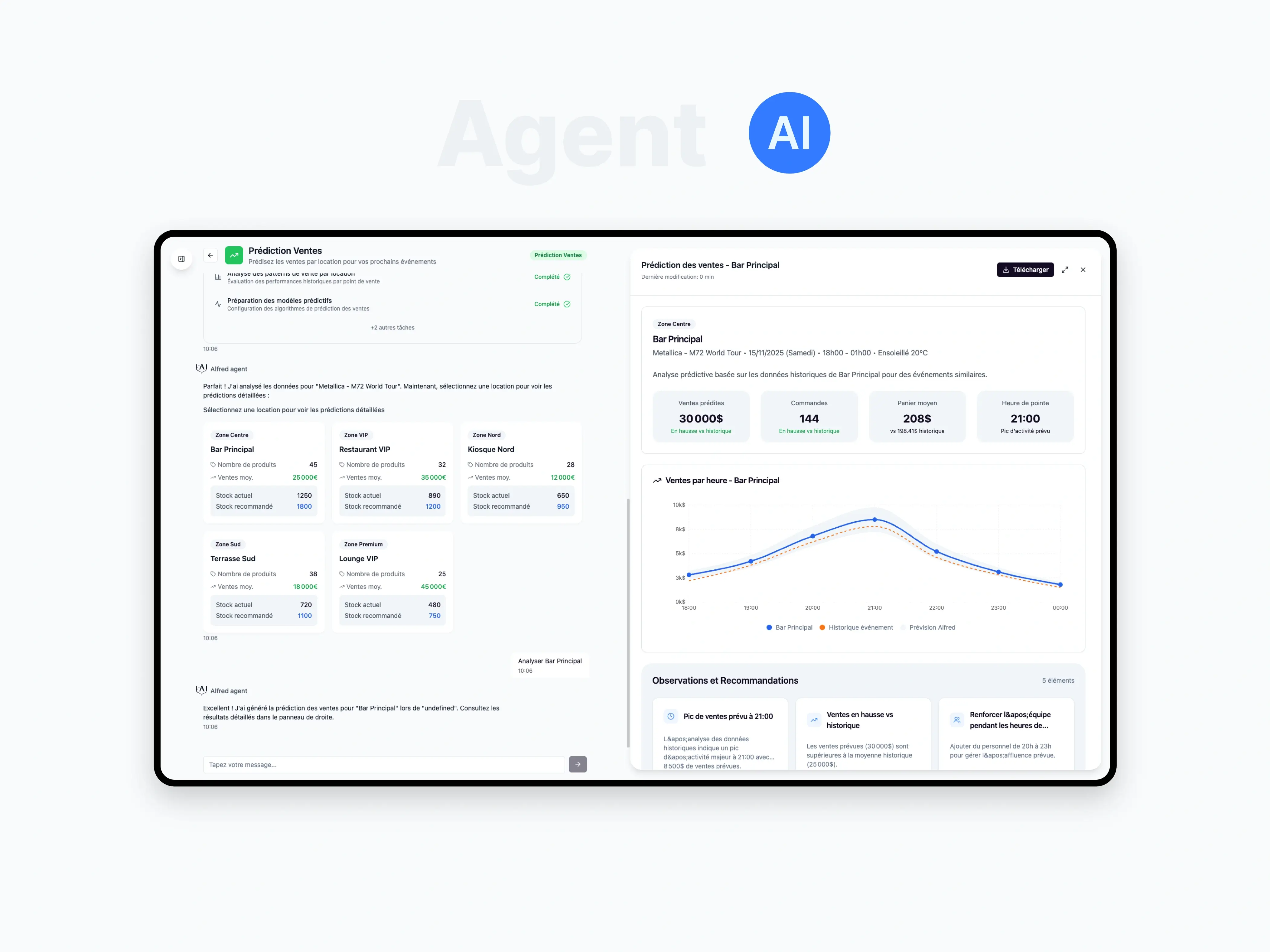
The first thing is orchestrating AI agents instead of operating a single tool. Designing a SaaS product in 2026 increasingly means deciding which agents the user is talking to, when they hand off, and what state they share. The interaction surface goes beyond buttons and forms. A booking system might involve a search agent, a recommendation agent, and an availability agent that coordinate behind a single conversational interface. The designer's job is figuring out which of those should be visible to the user, when the user should see machine reasoning, and when the system should just decide. None of this is solved by Figma.
The second is reading systems instead of screens. When generative tools can produce any individual screen, the value shifts to what sits underneath: data shapes, edge cases, error states, what happens when an agent gets it wrong. That is where most AI-generated designs collapse. They make beautiful happy-path screens and forget that real products spend most of their time outside the happy path. A designer who can sketch the data model on a whiteboard before opening Figma will out-ship one who cannot, every time.
The third is vibe coding. Reading and modifying production code well enough to ship a feature without waiting for a developer. v0, Bolt, and Replit Agent have made this realistic for designers who never coded before. The teams moving fastest in 2026 have designers who push small things into the repo themselves: copy fixes, layout tweaks, error state polish. Not big features. Just the kind of one-line changes that used to wait a sprint for engineering bandwidth.
The fourth is knowing when to throw out the AI output. Generated UIs default to the average. They are confidently mediocre. A designer who can tell when the model is producing slop and start over saves more time than one who relentlessly accepts. The skill is taste, and taste is what models do not have. They produce the median of what already exists. A designer's job, increasingly, is to push beyond the median.
What still matters from 2025
Empathy with users. Communication with engineers. Prototyping discipline. The ability to defend a decision with a reason rather than a vibe. None of that changed. The list from 2025 remains the foundation. The 2026 additions sit on top of it, not in place of it.
What changed is the floor. A junior who only knows Figma is competing with a tool that costs less than lunch. A senior who only does production work is competing with a junior who learned to use that tool well. Either way, the work that is purely about producing artifacts is shrinking.
A concrete example
I am working on a dashboard for a SaaS product. A year ago that meant a week wireframing the main flow in Figma, walking through it with stakeholders, then handing off to development.
In 2026 I gave Figma Make the data model and the user goal in writing. It returned a working interactive prototype in twenty minutes. I spent the rest of the day rejecting most of what it produced and rewriting the parts that mattered. Those parts are where the product lives. The model could not invent them.
The time saved did not go into rest. It went into testing two more flows the same way, then meeting with engineering to talk about the data model that the AI had implicitly assumed and that we needed to actually build. That last conversation was where the value was. The prototype was just the artifact that made the conversation possible.
What to learn next
A real coding workflow with v0 or Bolt. Ship one feature end to end. Pick an agent framework, whichever your platform uses, and build a small one. Read production logs. If you cannot tell from logs why a user dropped off, you are working blind. And write. Short, plain prose. The teams moving fastest with AI write the clearest briefs.
The least obvious skill: comfort sitting with a half-built thing for longer. AI gets you to a draft fast. Knowing whether the draft is a good draft, or a confidently-mediocre one that will lock the team into a bad direction, takes patience that most teams skip. The 2026 designers I trust spend more time thinking before generating, not less.
The 2025 list is still the baseline. The 2026 additions are not optional.